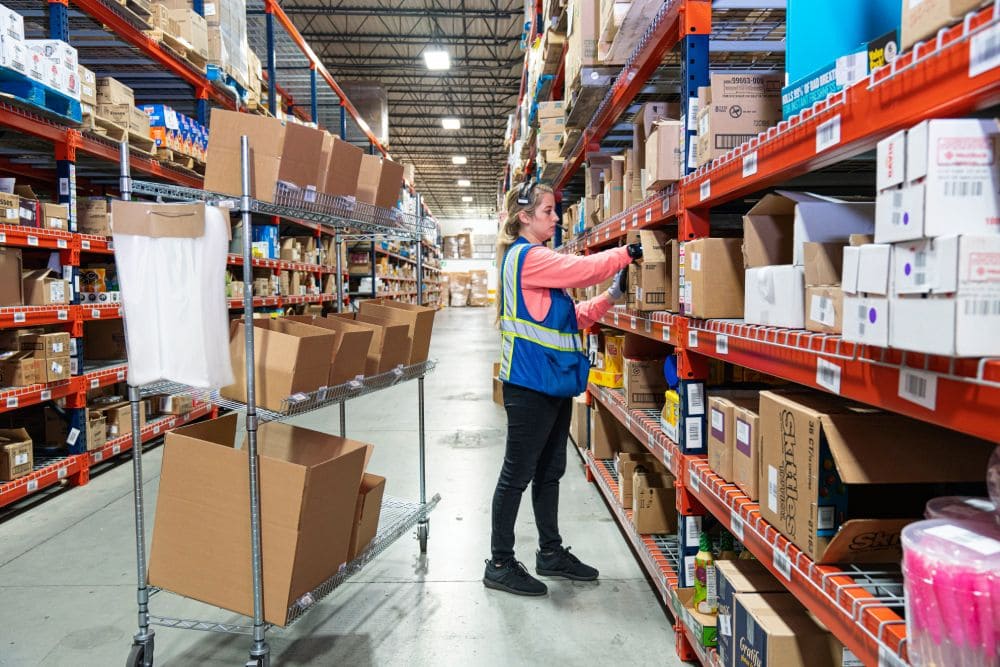


Warehouses are increasingly exploring how to move their order picking process from single, discrete order picking operations to optimized batch picking, where software groups and releases multiple orders together instead of processing one at a time.
Customers using Numina Group’s Real-Time Distribution Software (RDS™) Warehouse Execution Software (WES) consistently report major gains in picking productivity and accuracy across their order fulfillment operation. This article explains how advanced order picking processes work with an existing ERP/WMS and how wave release, batch picking, and cluster picking can work together within a WES to optimize order fulfillment.
What Is Batch Order Picking?
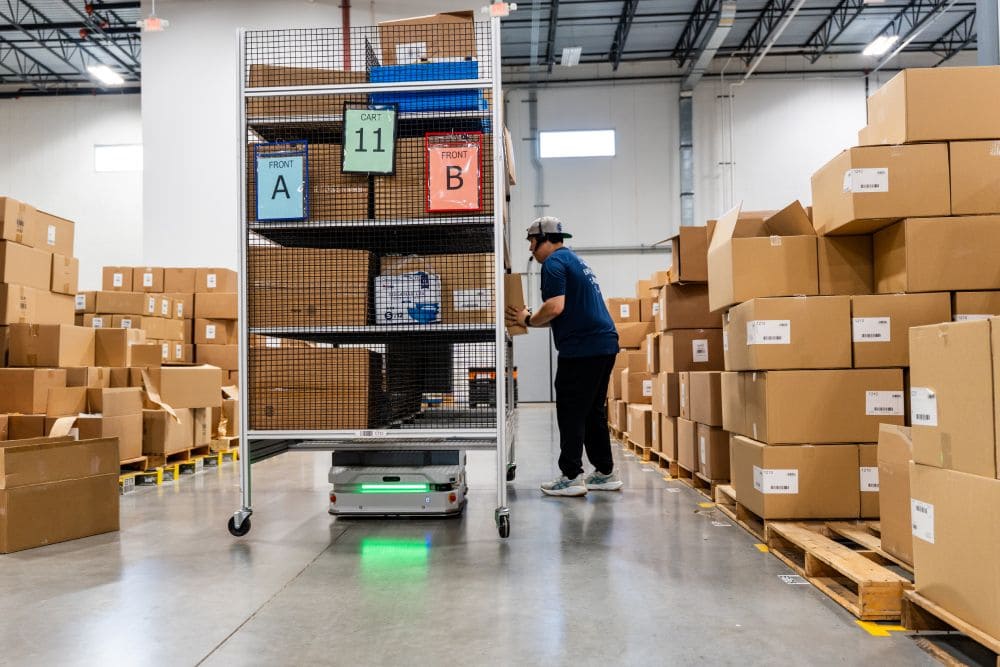
Batch order picking is a picking process where software specifically developed to increase a faster picking process selects groups of orders, often 12 to 30 or more, so they can be picked more efficiently during a single pick trip. The software releases the “batch of orders” so more items are picked in an optimized warehouse group of aisles or the pick zones. Rather than sending one associate to fulfill one order at a time, a batch picking system selects orders that share common SKUs, storage zones, or shipping deadlines, and assigns them to a batch cart, forklift equipped with a shelf cart, or automated vehicle such as autonomous mobile robot, AMR for executing batch order picking.
The main way to raise warehouse picking productivity is by improving both slotting and raising the pick density at each location visit during the batch cart picking mission. The more picks per operator’s stop results in less travel and higher pick rates.
Order Release software plays an important role in identifying the best group of orders to pick together based on factors such as SKU affinity, zone location, carrier cut-off time and pick path sequence. Several software algorithms work together to select the group of orders that both increase picking density and minimize the pick trip travel distance required to pick complete the group of orders.
Wave Picking vs. Batch Picking: Why the Best Systems Combine Both
Wave picking and batch picking are often treated as separate strategies, but they solve different parts of the same problem. Advanced order fulfillment software can combine elements of both.
- Wave picking priorities which orders are released and when, matching groups of orders to carrier cut-off times, shipment priorities, and other business rules so the warehouse hits its outbound schedule.
- Batch picking determines how those released orders are grouped and picked, clustering orders by SKU, zone, or cart capacity so each pick trip covers as many orders and items as possible.
When a single software platform manages both wave-based release timing and batch-based picking, it can maximize pick density across all the available orders while also protecting shipment priorities. Order release software also manages shipping logic to ensure same day and priority orders are released in the right time window to be picked, packed, and shipped before carrier cut-off time.
Numina Group’s RDS™ order release module is built around this combined functionality approach to improve the order flow efficiency across the entire warehouse operation. When paired with RDS Voice Picking, wearable mobile computers, and hands-free barcode scan validation, the operation gains an automated, paperless, software-driven batch order picking process designed to improve both productivity and accuracy.
How Much Does Batch Picking Improve Productivity?
In a discrete order picking process, where operators pick one order at a time, certain order profiles can require an operator to travel across much of the warehouse to complete a single order If the order requires five to ten items spread across multiple zones in a 100,000 to 600,000 square foot distribution center, discrete order picking can result in operators spending 85% to 90% of their time traveling instead of picking, limiting productivity to approximately 30 to 40 lines per operator hour in some applications.
This type of process can also result in multiple operators repeatedly visiting the same high-velocity bin locations throughout a shift, creating unnecessary travel and wasted motion. That’s a throttle on warehouse productivity with only 30 to 40 lines picked by an operator per hour. This practice results in multiple operators visiting the same bin locations 50 or more times per shift, the true definition of waste!
Adding a warehouse execution system (WES) with optimized batch order release and voice-directed picking changes the productivity equation at both existing and new warehouse operations. When a warehouse picks 15 or more orders at once—and several orders require items from the same bin location, a manual batch cart, forklift batch cart, or large capacity AMR batch cart can turn what would have been 15 separate location visits into a single stop.
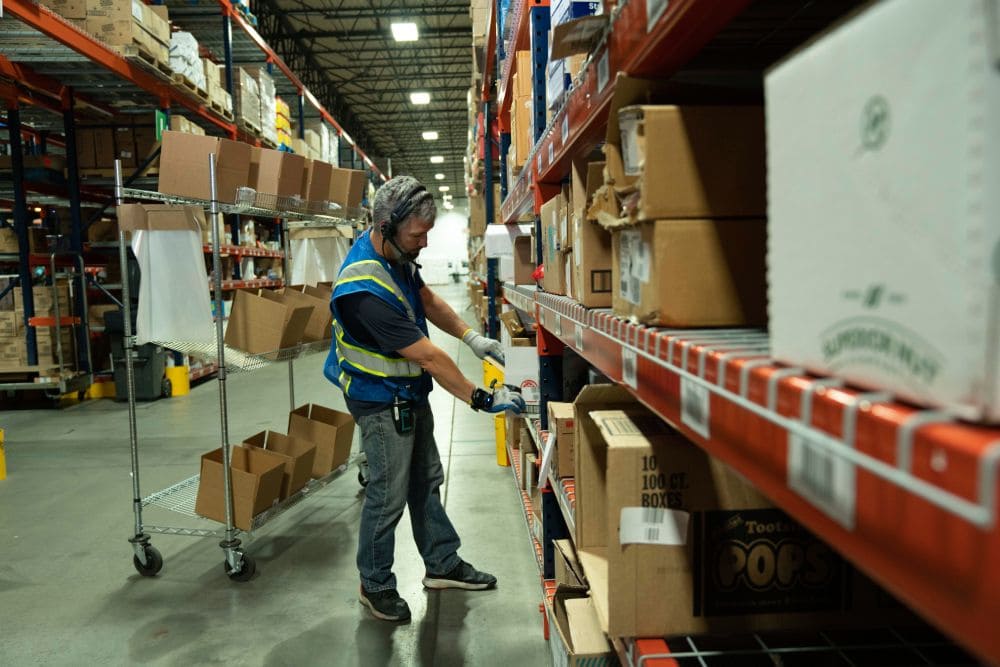
Picking performance improves by 150% when four or more of the same SKU are picked at the same time from the same location. This is a great example of the power of combining batch and cluster picking to allow operators to complete a single location visit, performing multiple pick transactions, all within 45 seconds.
Voice-directing the picking activities also improves accuracy by guiding operators through each step with pick instructions and barcode scan validation of each competed task.
Warehouses that incorporate voice directed batch order picking commonly report productivity improvements in the range of 50% to 100% compared with discrete picking. Voice-directed batch picking combined with cluster picking can operate roughly twice as fast a single-order-at-time cart pick process. These figures reflect commonly reported industry ranges for warehouses transitioning from discrete to batch picking. Actual results vary by facility, order profile, and SKU cube and weight mix.
Key Benefits of Batch and Cluster Picking
- Slot by category to keeps families of related products (SKU affinity) stored together in a zone increases batch pick density and shortens travel paths, since items that are frequently ordered together are also stored near each other.
- Eliminate repetitive travel: Software-driven order grouping can reduce bin visits from 50 to 60 per shift under discrete picking down to 5 or 6 visits per shift for high-velocity A and B SKUs.
- Enable accurate cluster picking: With step-by-step voice direction, operators can pick a single quantity for a stop and split it correctly across multiple orders on the cart. For example, a “pick 5” voice command can direct an operator to put two units to Carton A, scan to confirm, then put three units to Carton C and scan to confirm, all in one stop.
- Higher throughput: Voice-directed batch picking combined with cluster picking is commonly reported to run about twice as fast as single-order-at-a-time batch cart picking, resulting in more orders fulfilled per hour at a lower labor cost per order.
Optimized Wave Release in Zone-Based Batch Picking
RDS™ wave-based release evaluates multiple variables when selecting which orders to group and send to a cart for picking, including shipment priority, carrier cut-off time, shared SKUs, and whether orders can be completed within the same zone or adjacent zones to reduce travel time. The software builds waves that let multiple operators pick the same batch simultaneously across different zones of the warehouse, keeping cases, eaches, and oversized items that belong to the same order moving through fulfillment on the same timeline.
Within each zone, operators use voice or wearable computers with hands-free barcode scan validation to pick and place items directly into shipping cartons or totes. Orders that draw from multiple zones are picked into totes and routed to an order sorter or put-to-light wall for consolidation and packing, while orders that complete within a single zone move straight to packing. Single-line orders are picked into separate totes and routed to a speed-pack process to minimize touches. Warehouses using this optimized order release approach commonly report a lower labor cost per order and overall productivity gains in the range of 50% to 70% or more compared to primarily discrete order picking, for both B2B and e-commerce fulfillment.
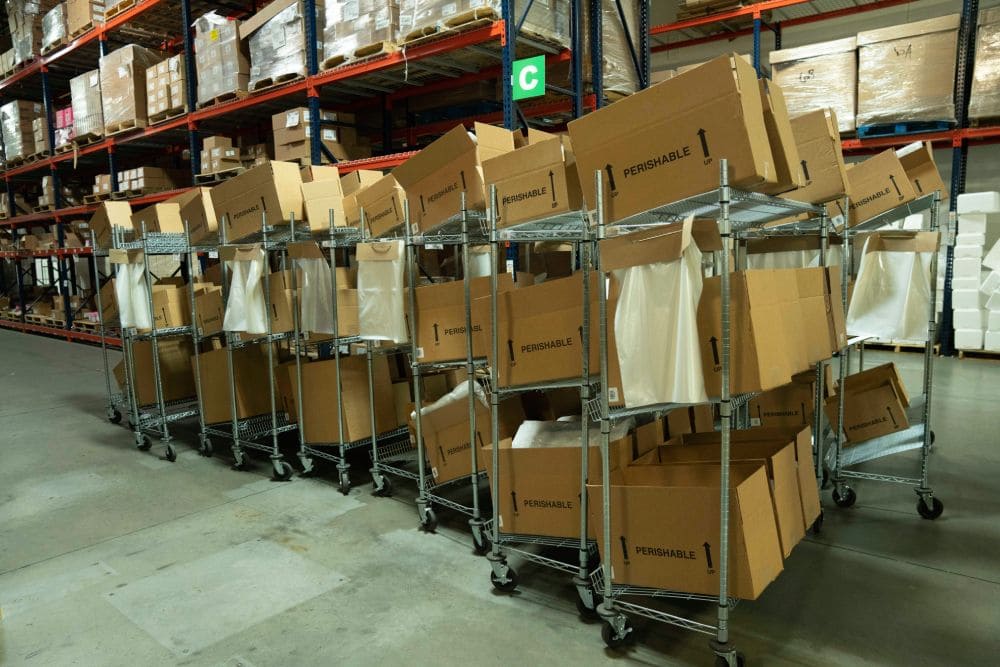
How Numina Group’s RDS™ Order Release, the Key to Batch Picking Gains
As a recognized leader in warehouse improvement design and automation software provider and material handling technology integration, Numina Group’s Real-Time Distribution Software (RDS™) includes a robust order release module built to optimize wave, batch, and cluster picking techniques along with blending the right automation technologies suited to the customer’s application.
When you choose an automation integrator, you’re choosing a team based on industry expertise with a track record of delivering results independent of the material handling hardware and robotics technology. Numina Group’s team works in partnership with the client to optimize operations then selects the mix of technologies best suited to generate the highest ROI for the project.
An example of the ROI possible from upgrading an existing warehouse operation with RDS™ batch picking automation comes from a school supply distributor that implemented RDS in 2023 using a combination of manual batch push carts and forklift pick carts.
Following implementation, pick rates increased from under 75 lines per operator hour to as high as 140 lines per operator hour in certain zones. RDS Order Release uses SKU size, weight, product characteristics, cartonization logic, and shipping requirements to optimize order grouping and direct voice picking to shipping cartons, totes, or polybags. The operation also reduced pick labor and parcel and LTL shipping costs by approximately 10%, reduced overall order fulfillment costs by 40%, and improved accuracy by 1.5 percentage points to consistently exceed 99.8%.
RDS™ is a highly flexible software platform that integrates multiple types of picking vehicles and technologies, including manual pick carts, forklifts, autonomous mobile robots (AMRs), automated storage and retrieval systems (AS/RS), Goods-to-Person (GTP) systems, and zone-routing conveyors to support automated pick, pack, and ship operations.
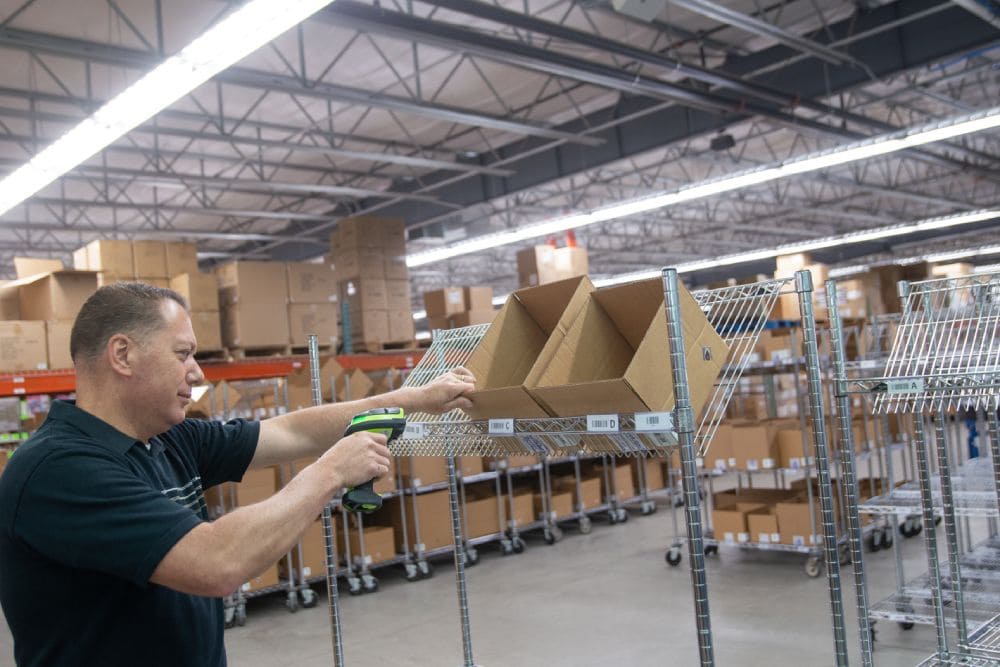
Numina Group: The End-to-End Warehouse Automation Partner
RDS™ is a modular software platform that includes Order Release, a Voice Picking Suite, Pick-to-Light, and Put-to-Light, all working together to drive higher productivity in batch picking across fork trucks, carts, and AMR pick carts order picking.
A great example of this is Numina’s Batchbot 2.0 software module that unites large capacity AMR mobile pick carts capable of picking 36 orders at a time across mixed, each, and full case applications.
KUKA AMRs are paired with RDS™ WES and the Victory Voice™ Picking Suite. RDS automatically creates optimized, prioritized batches of orders and coordinates the movement of AMRs and operators using advanced “Meet Me Mode” logic. The software selects and voice-directs the closest available operator to meet the AMR at each picking zone.
Batchbot™ 2.0 has achieved operator each-pick rates of 300+ lines per hour and case-picking rates above 260 per hour in customer applications. By coordinating AMRs and voice-directed operators as a unified picking team, the process can reduce operator walking time to typically under 15 minutes per hour.
The result is that more of each operator’s time is spent picking rather than walking, driving forklifts, pushing heavy carts, or repeatedly climbing on and off material handling equipment.
Numina Group’s mission is to identify how to raise productivity across each component of the order fulfillment operation, reducing dependency on manual labor while directing employees in a leaner faster practice with the least number of errors.
We help clients identify bottlenecks and jointly define improved workflows that eliminate wasted touches. Once the improved warehouse processes are documented, Numina works with the customer to evaluate the right combination of technologies to magnify those improvements, including software, voice picking, pick-to-light, AMRs and robotics GTP, to drive growth and profitability at the client’s operation.
Backed by 40 years of warehouse automation expertise and continuous R&D investment, Numina Group is focused on delivering solutions with documented, measurable ROI.
Batch Picking and Order Release Optimization FAQs
What is the difference between wave picking and batch picking?
Wave picking controls when orders are released, grouping them by shipment priority and carrier cut-off time. Batch picking controls how released orders are grouped for picking, clustering them by shared SKUs or warehouse zone so one pick trip covers multiple orders. Combining both lets a warehouse hit outbound deadlines while maximizing pick density.
What is cluster picking in a warehouse?
Cluster picking is a method where an operator picks several orders at once for multiple orders contained on a cart. Using voice with product and location scan-directed instructions, the software picks a define number of the same SKU with voice and scan confirmations to split the correct quantity of an item across multiple order cartons/totes during the pick. It is commonly used together with batch picking to reduce travel and increase picking speed.
How much can batch order picking improve warehouse productivity?
Warehouses moving from discrete, one-order-at-a-time picking to optimized batch picking commonly report productivity gains in the range from 50% to 100% or more, depending on order profile, facility size, SKU types, slotting practices and picking technologies used at the operation
What technology works well with batch and wave picking software?
Batch and wave picking software is commonly paired with voice picking, wearable mobile computers, hands-free barcode scan validation, pick-to-light and put-to-light systems, AMRs, and zone-routing conveyors. Numina Group’s RDS™ order release module is designed to unify multiple technologies into the picking operation.
What tools are available from Numina Group that support batch order picking?
Numina’s RDS-WES is a modular software platform: the RDS Order Release module acts as the intelligent automation engine, using multiple algorithms to determine which orders should be grouped into a batch based on factors including available pickers, travel-path optimization, shipment priorities, and SKU affinity.
RDS paired with AMRs and the Victory Voice™ picking Suite are key components of Batchbot™ 2.0, Numina’s advanced batch order picking automation solutions.
AMRs handle order movement and heavy cart transportation so operators can spend more of each hour actively picking instead of walking long distances, pushing carts, or driving forklifts. Batchbot™ coordinates robot and operator movement as one unified picking application and has achieved pick rates of 300+ lines per operator per hour in customer applications
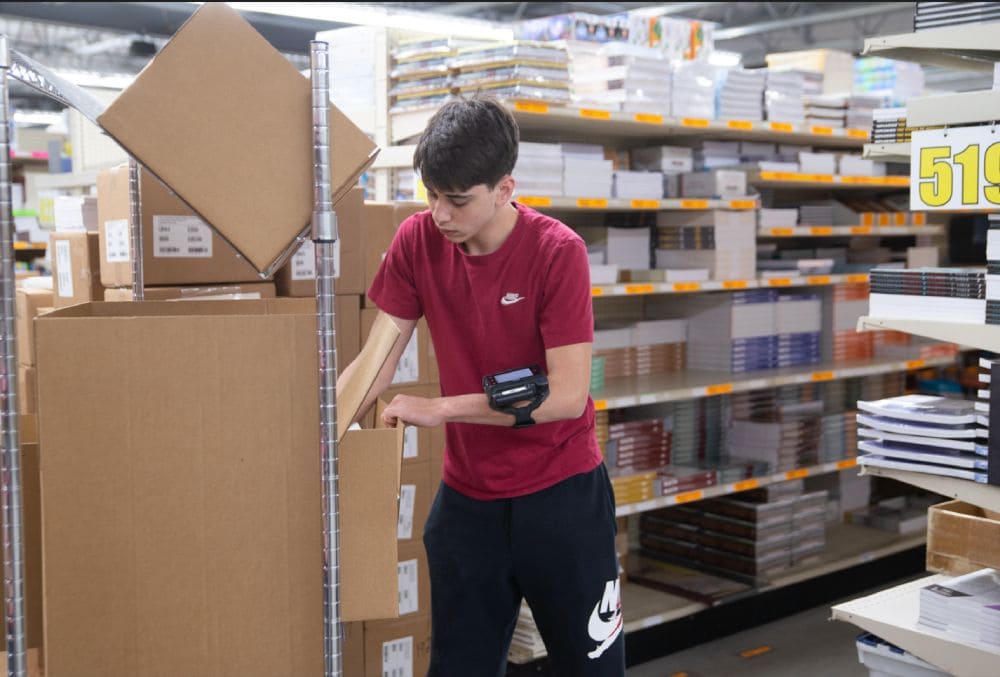
Wave picking vs. batch picking, and does continuous order release outperform wave-based picking
RDS moves beyond treating wave, batch, and continuous order release as isolated strategies. Instead, RDS Order Release blends elements of all three using factors such as available pickers, travel-path optimization, shared SKUs, shipment priorities, and historical data to make optimized release decisions.
The goal is not to claim that continuous release universally outperforms wave picking. Different order profiles require different release strategies. RDS applies rules-based, data-driven logic to select and prioritize orders based on current operating conditions rather than forcing the warehouse into a single rigid order release method.
What should companies look for in warehouse picking software?
Strong warehouse picking software should combine advanced order release and picking functionality with proven integration capabilities and measurable customer results.
Customer case studies and videos document strong results from RDS-based picking solutions. NorthShore Care Supply achieved more than a 2X productivity increase by combining RDS Batchbot™ optimized order release with voice picking and large-capacity AMR batch cart picking. Merit Medical reported a 100% productivity increase, while United Medco doubled productivity while reducing labor by 60%.
RDS includes a REST API and pre-developed interface modules for ERP/WMS platforms including Acumatica, Oracle, NetSuite, SAP, Microsoft Dynamics 365, JDA/Blue Yonder, Manhattan, HighJump, and others.
RDS functions as the warehouse automation layer between existing business systems and the technologies executing picking, packing, and shipping processes, helping reduce integration risk while improving operational performance.
Frequently Asked Customer Questions about WES Systems:
Do all Warehouse Execution Systems include batch order picking and support both traditional and emerging automation technologies?
No. WES platforms vary significantly in functionality and the range of automation technologies they can manage.
Numina’s RDS-WES offers a modular family of software applications for end-to-end warehouse automation while integrating with an existing ERP or WMS. The ERP continues to manage front-office business functions and core enterprise processes, while RDS adds advanced warehouse execution functionality.
RDS capabilities include optimized Order Release, real-time order prioritization, cartonization logic, Voice Picking, automation control, and other execution functions. These modules work together to improve batch picking through better order selection, increased pick density, and intelligent prioritization of same-day and critical orders.
RDS can automatically release orders within configurable windows so they can be picked, packed, and ready to ship before parcel and LTL carrier cutoff times. RDS Voice Picking then provides the operator-facing execution layer, directing and validating the individual tasks required to complete those orders accurately.
Additionally, RDS offers WMS functionality that can complement ERP platforms with limited warehouse management capabilities. These functions include real-time inventory location management, velocity-based directed put-away, min/max replenishment, cycle counting, and SKU cube and storage-location management.
By analyzing SKU movement and velocity, RDS can help keep fast-moving products in appropriately sized storage locations and place A-moving SKUs within ergonomic “golden zone” locations to support higher batch picking productivity.
RDS is purpose-built to manage and orchestrate technologies including Voice Picking, Pick-to-Light, AMRs, and Goods-to-Person systems without requiring a separate software integration layer for every automation technology.
Is Batch Picking Automation Available Through CapEx, Lease, or SaaS Financing
A pick, pack, and ship order fulfillment software and hardware project needs a strong business case and measurable ROI. The first step is a site evaluation to assess the operation, identify improvement opportunities, and project the potential return on investment.
For warehouse automation projects that are a strong fit for WES-driven batch order fulfillment, Numina typically targets an ROI of approximately 24 months or less. A Numina Group sales engineer can conduct a discovery call and facility evaluation to develop a budgetary investment, projected ROI, and financial acquisition options suited to the business.
Automation with a rapid ROI may be well suited to lease-to-own financing or an Automation-as-a-Service/SaaS model in addition to a traditional CapEx purchase.
In applications achieving labor productivity gains of 50% or more, the monthly operational savings can help offset the automation investment. The complete ROI calculation can include labor savings, accuracy improvements, reduced parcel and LTL shipping costs through better cartonization and cube utilization, and increased throughput that allows the operation to ship more orders per shift.
The goal is to create an automation investment where measurable operating savings and increased capacity generate business value that justifies the investment.
Plan, Design, and Implementation Timeline
A design-first approach is the best way to uncover the process improvements that create business value before selecting technology. Once the improved processes and requirements are defined, the next step is evaluating and selecting the combination of technologies needed to create the right solution for the customer’s operation.
Numina offers multiple acquisition options, including a firm-cost CapEx purchase, OpEx lease plans, and Automation-as-a-Service subscription/SaaS plans.
A typical project may include:
- Define and Design Study: 4–8 weeks
- Technology Review and Selection: 3–6 weeks
- Integration and Deployment: approximately 16 weeks
- Go-Live and Hypercare Support: 2–4 weeks
- Post-Launch Optimization: 30–90 days
Depending on the scope and complexity of the project, the overall timeline typically falls in the range of approximately six to nine months from order placement to go-live.
Talk to Numina Group About Your Order Picking and Warehouse Automation Initiatives
Numina Group’s RDS™ Order Release module combines wave picking, batch picking, cluster picking, and intelligent order prioritization within one platform designed to raise pick rates, reduce labor cost per order, and keep multiple picking vehicle types working from the same optimized release logic.
Whether your operation relies on manual carts, forklifts, AMRs, Goods-to-Person systems, or a combination of technologies, Numina Group can evaluate your current processes and determine where software and automation can deliver the strongest operational and financial return.
To see how batch order picking could improve your warehouse’s picking speed, contact Numina Group to talk with our team and arrange a site evaluation.
Note: Productivity results and ranges cited throughout this article are based on Numina Group customer applications and documented project results. Actual performance varies based on facility layout, order profile, SKU characteristics, workforce, technology configuration, and other operational factors.